Nothing

Today’s prompt was to set the timer for 5 minutes, and stare at anything, or nothing. Then write about “the thoughts, the questions, and the answers that came up in that moment of slowness, of stillness.”

I started by observing one of my indoor plants, and quickly diverted my attention toward the cedar hedge. I’m not sure about the thoughts, questions or answers. Some thoughts flitted in and out of my brain, leaving as abruptly as they entered.

Suddenly the fridge stopped making its noise. That’s when I realized how much noise the fridge actually makes. It’s strange how when the motor is running it is not noticed, but the silence is deafening.

That thought took me back to all those over-night train rides from Bangkok to Trang. I took that trip at least once a year for 10 years. We could only afford to travel in 2nd class where each passenger had a bench, the windows were open, and there was no air-conditioning. In the early evening the stewards would come around, fold down the benches and pull out the bunk beds.

I loved travelling by train, to see the country-side that wasn’t visible along the highways. As we travelled through urban areas, we could see the backs of peoples’ home where children played, junk was stored and laundry hung from the clothes lines. Drawing near to any station we could hear the vendors call out “Gai yang” (roasted chicken) or “Khao Lam” (sticky rice in bamboo), and many other delicious snacks that would get us through the long trip.

In the later evening as people went to bed and the constant chatter stopped, the train continued to chug-chug for hours. The steady sound of the wheels along the tracks and the gentle rocking helped me sleep, but every time the train pulled into a station and stopped, I awoke suddenly to the intense quiet.

Five minutes doesn’t seem long, unless one is not doing anything. In those five minutes a lot of thoughts ran through my brain, circling, coming and going without a resolution, until they started to slow down and I could reminisce about some enjoyable experiences.
Creative projects

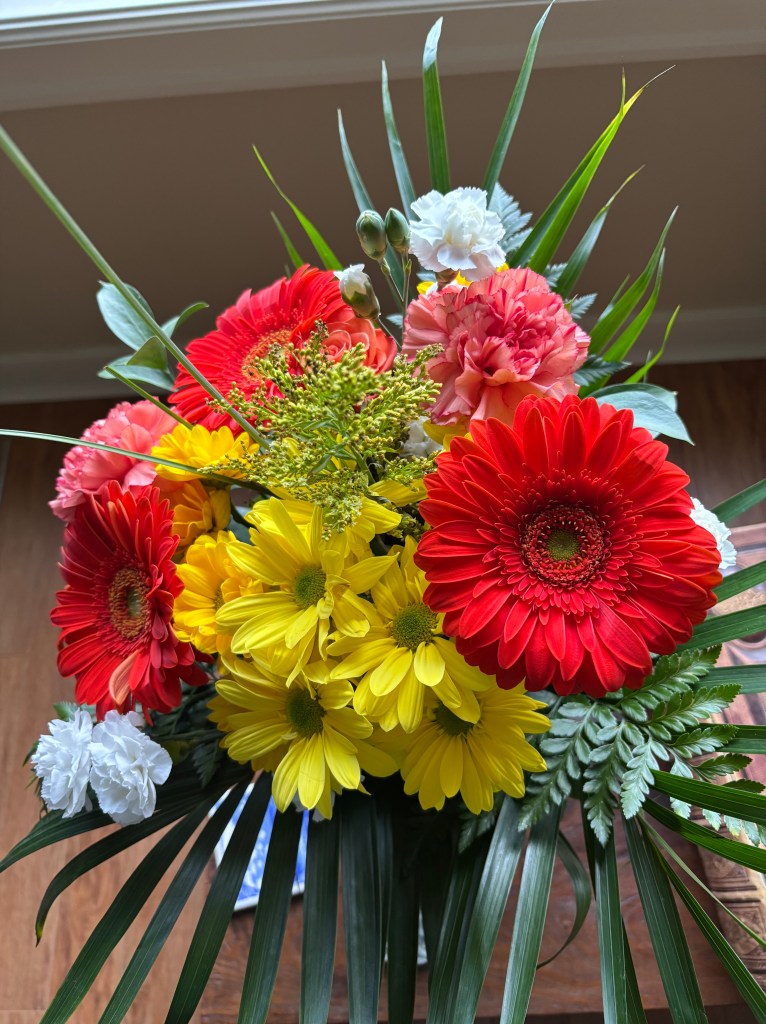
concert bouquet

Today’s prompt was to write about a time when I began doing something daily. All day I have been thinking about creative practice and other endeavours that I have done daily for either years, or just a few weeks.

I received this bouquet after a successful choir term and concerts. The repertoire chosen for these concerts consisted of favourite choral classics from what the choir has performed over the past 40 years. This is only my 2nd year with the choir, but I have accompanied choirs of various types and abilities since I was 16. Often the reward is knowing that I have done my best, and receiving a bouquet.

Ever since the age of 8 when I began piano lessons, throughout most of my life, piano and now organ practice has happened daily. There have brief periods it wasn’t possible (camping trips, road trips, recovering from childbirth, etc.) but there are very few days where I don’t spend any time making some sort of music.

Other daily endeavours have included the 100 day challenge of the Isolation Journals (spring of 2020) as well as a long streak of 2060 days of DuoLingo. I am quite proud of that achievement!! Over the past 5 1/2 years I have spent between 2 and 20 minutes a day practicing French, German or Italian, and now Chess. There is no way I am going to skip a day now!!

I have tried to stick with a daily exercise program. Over a year ago I started walking for 30 minutes every morning. It was nice to get out before sunrise, before other people started walking (I like to avoid conversations with strangers…) but then we were warned about coyotes in the neighbourhood. So, the walks stopped. I don’t walk when it’s hot and sunny, and I don’t want to walk when it’s dark, as I am afraid of coyotes, people and angry deer.

Then I tried an exercise App. It worked for a while, but I find it quite boring. I know that I need to get in better shape so maybe it’s time to start a new daily exercise routine. If I have the discipline to reach 2060 days of language and chess practice, I should be able to stick with a daily exercise routine.

But…I would rather make music….

Ten images

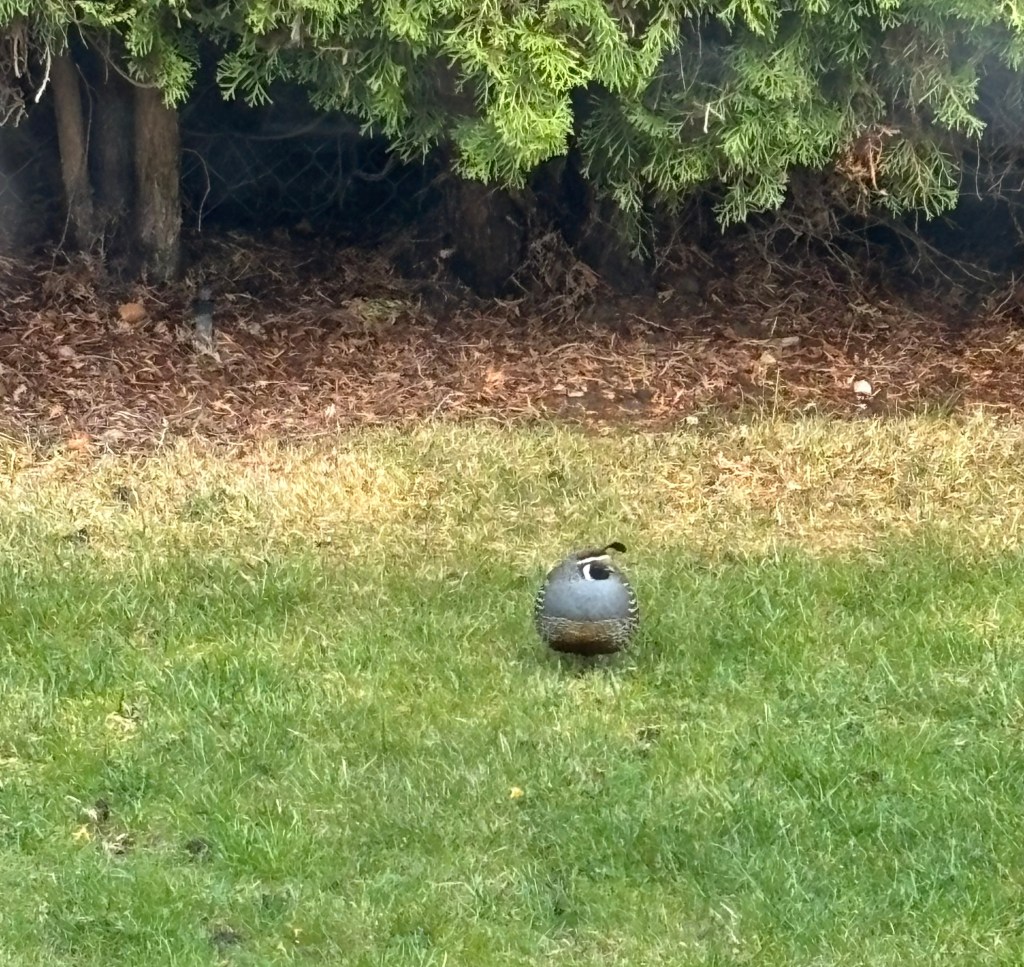
Today’s prompt is to list 10 images from the past 24 hours. Before I start the list, allow me to talk about this photo. It was taken slightly more than 24 hours ago. This very, very round California quail stopped by for a visit the other day. According to Wikipedia it is a male quail. He stared at me for a while, turning his head as I snapped the photo, then scurrying away under the safety of the hedge.

Here is my list:

  1. bumble bees collecting pollen and nectar from the garden flowers
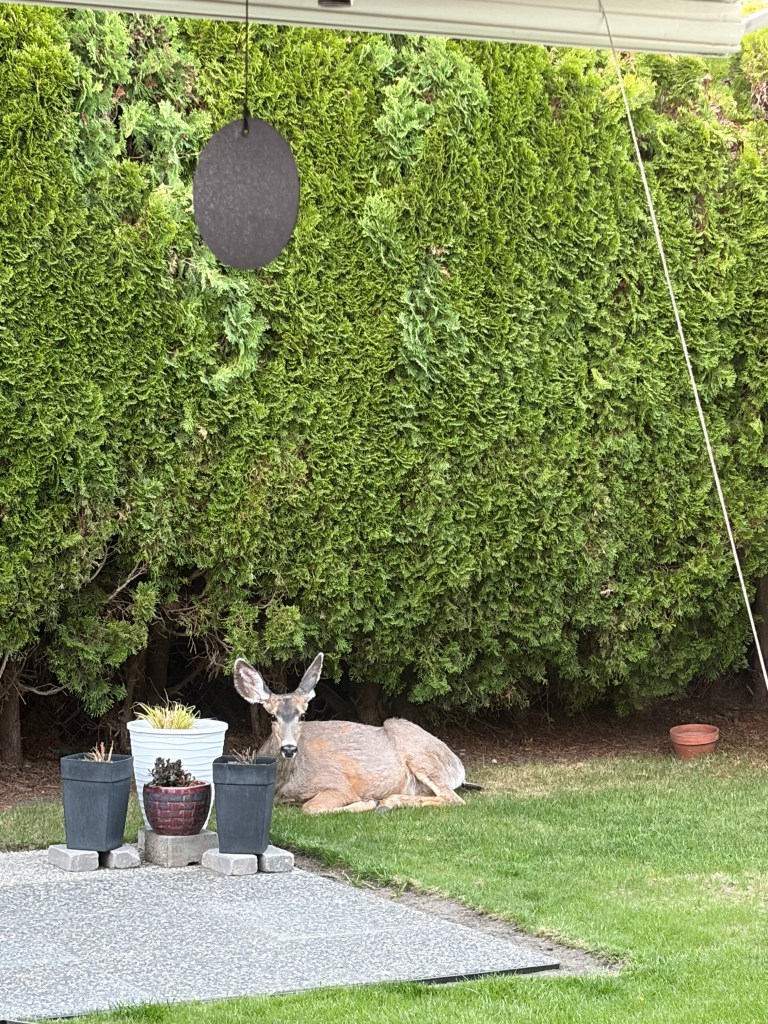
  2. injured young doe struggling to walk across the back lawn
  3. my 15-yr old organ student happy to receive positive feedback
  4. butchering the lawn edges with the new weed-whacker
  5. delicious soup full of fresh garden herbs simmering on the stove
  6. the most musically intuitive student I have ever taught, interpreting a new piece
  7. hundreds of plugs of soil left behind by the aerator, looking like goose droppings
  8. excited, tail-wagging dogs greeting me as they walk by
  9. birds chirping in the trees before sunrise
  10. small piles of sand that the ants are digging up from under the driveway

To write, or not to write

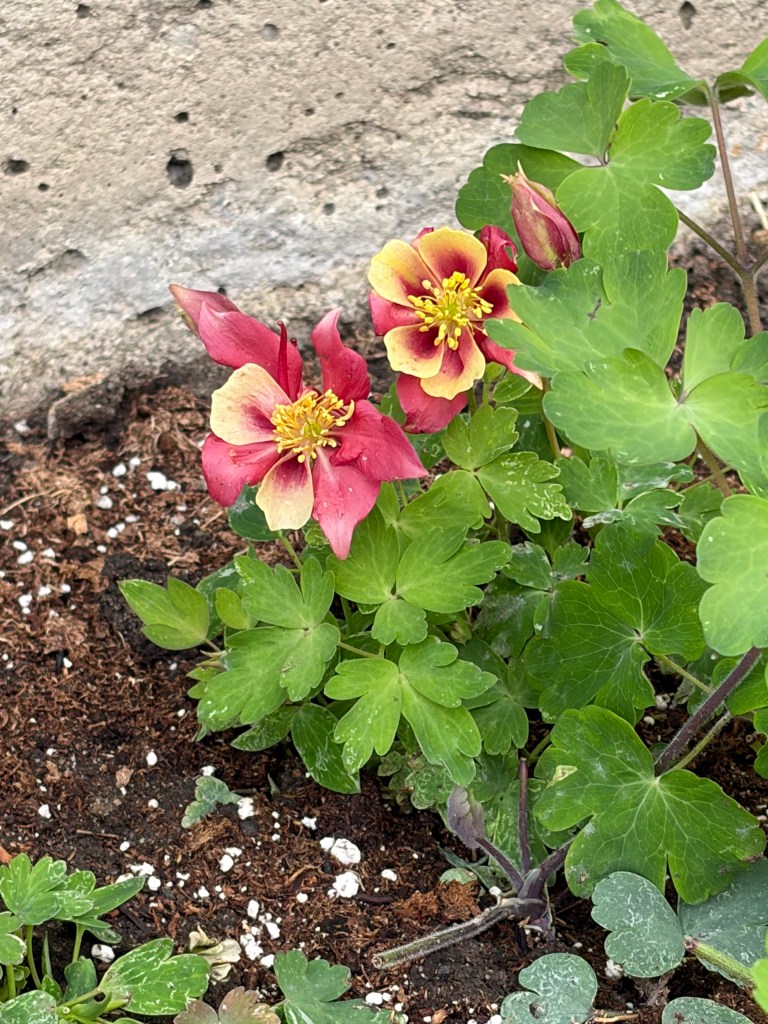
cute, tiny Columbine in my garden

I have decided to work my way through Suleika Jaouad’s book, The Book of Alchemy. Each of the 100 chapters, written by a variety of writers, contains an essay and a prompt for journalling.

I started following Suleika, the creator of the online community The Isolation Journals, back in April of 2020 during the Covid-19 lockdown. I was searching for something to keep me busy, and I heard about Suleika on “the Late Show with Stephen Colbert”. She began with a 100 day challenge, which I was able to keep up with since there wasn’t much else to do for that first few months of the lockdown.

The Book of Alchemy, is a guide to journalling as not only a therapeutic device but also an art form. Suleika reminds us that writing for as few as 5 minutes a day can create a spark of inspiration. For several days now I have been stuck on chapter 1 (so much for a 100-day project — I’m sure it will take me far more than 100 days to complete).

The prompt for chapter 1 by Dani Shapiro is “What would you write if you weren’t afraid?”. I have always been afraid to write. Afraid of criticism, afraid of having my true feelings discovered, afraid to let go and write something close to my heart. I was afraid that the wrong person would read it, ridicule me and share it with others who didn’t see value in me or in what I wrote.

When I was a teen I started to keep a diary. I would write a page or two regularly; not every day, but whenever I had something to say. Since I really didn’t have friends, or other safe people within my family, the diary was a place I could explore my feelings just a little.

That all came to an end the day I got in trouble for something only my diary knew about. I realized that even though the diary was hidden deep in my desk, under papers and other books, it was being read. That was the day I burned my diary, and never wrote again for many years.

The fear is still there — that the wrong person will discover my diary. Even here in this relatively secret blog, I keep my words at a safe level.

A close friend of mine suggested that when I write letters to people that might cause hurt, that I write what is deep in my heart, then promptly burn it…and let it go.

What would I write if I weren’t afraid? I am not sure.

Shrinking habitat

Scavenging

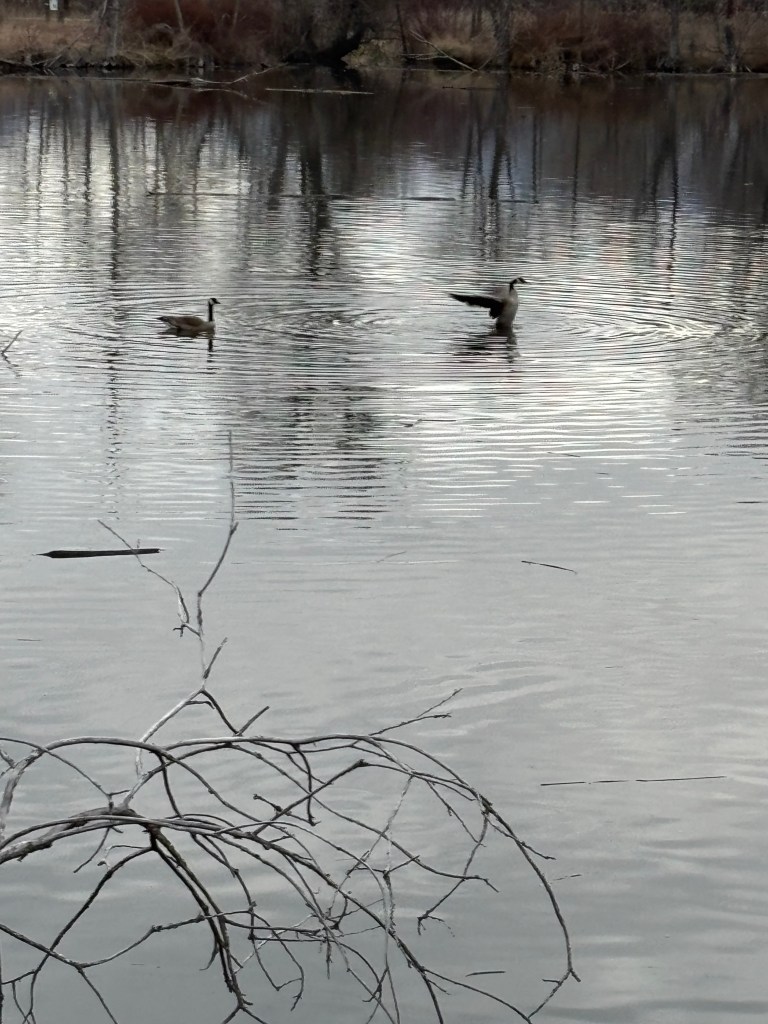
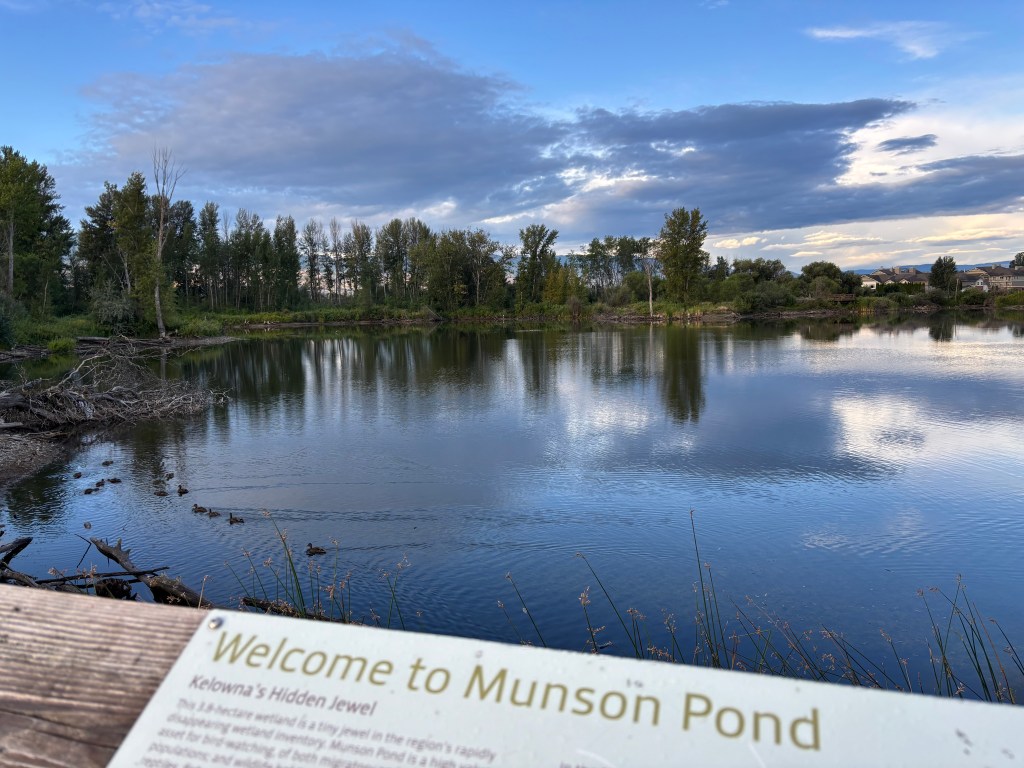
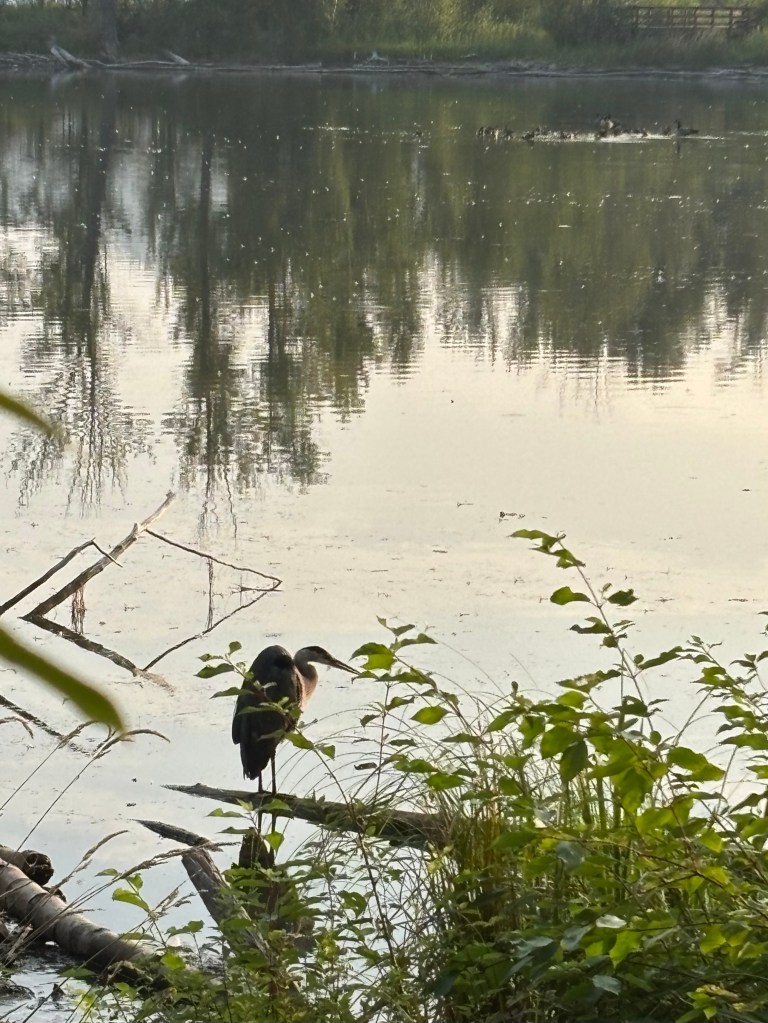
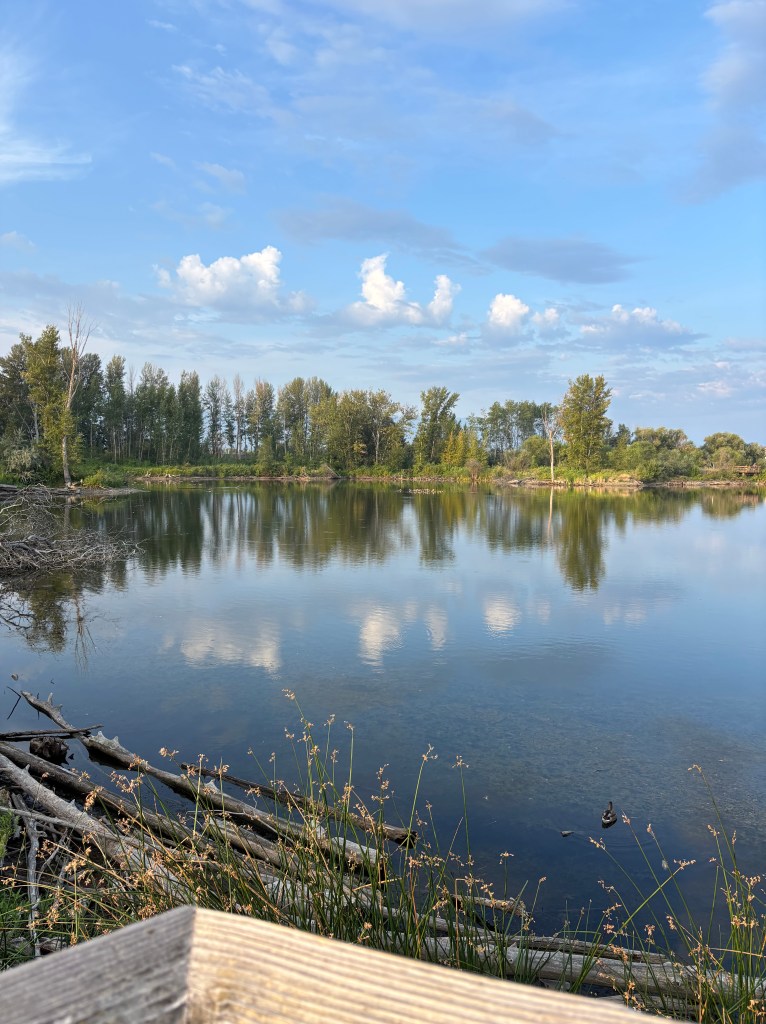
Two weeks ago construction work started next to a nearby pond. Not without controversy, this project had been discussed by the city and planners for several years.

Munson Pond originally belonged to the pioneer farming family. The Munson family moved into the area in the 1890s. In the mid-twentieth century the area which is now a pond, became a gravel pit.

The gravel was used in the building of the original Okanagan Lake bridge in 1958. The gravel pit was soon abandoned and filled with water naturally transforming into a lush habitat.

The city, along with the road construction company claims that the new road will provide easier public access to the pond and its diverse plants, birds, wildlife and insects, while improving commuting options for drivers and cyclists.

They say that building a road 100 metres from the wildlife habitat will not seriously affect it. Dissenters claim that it will destroy the current habitat, driving away wildlife and birds.

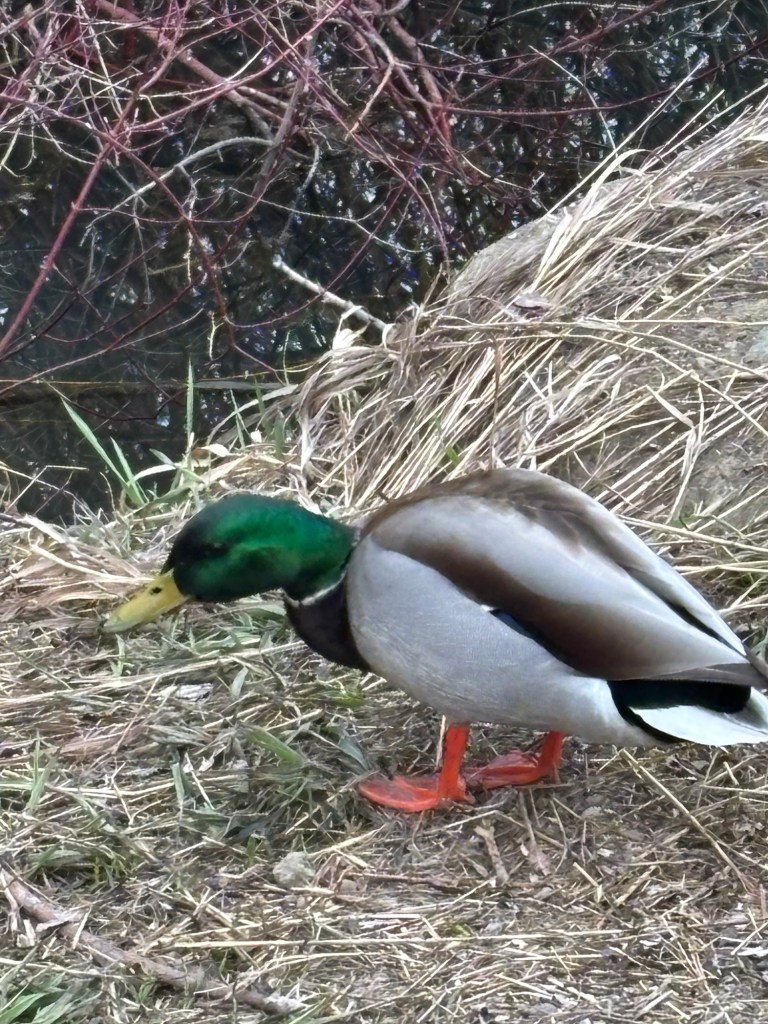
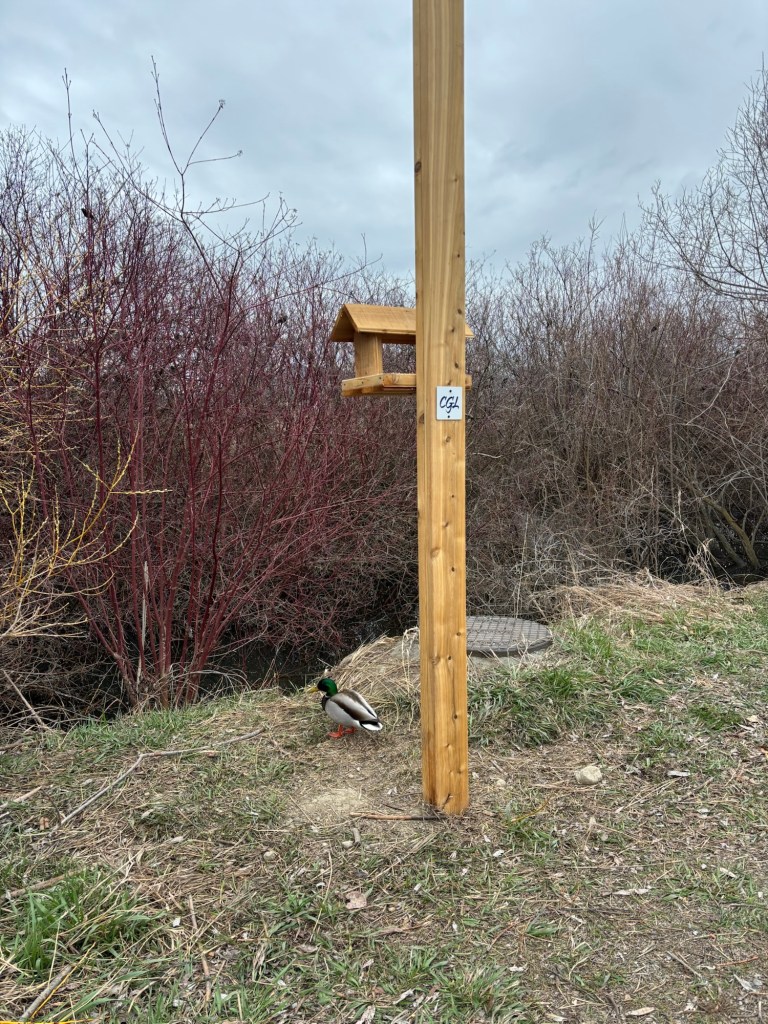
The construction company very kindly built several birdhouses and bird feeders near the construction site. In the photo above a duck was busy eating up seeds that had fallen from the feeders.

One of several platforms for birdseed

As I walked past the edge of the construction zone the other morning, the vivacious din of chirping chickadees and other birds in the trees and bushes caught my attention.

Change and growth must be expected, especially in the middle of a city, but I hope that those who have been planning and discussing this project for many years have carefully considered the importance of protecting wildlife and have taken all the steps needed to ensure this pond remains a sanctuary for all of us.

How to avoid conflict

-move. And keep moving. The longest time I have lived in a house is 10 years, the shortest was 2 months. Avoiding conflict was the common thread.

-read the room. When a person with whom I have a difference of opinion walks in one door, I leave through the other. Or if I am obliged to stay, I constantly move to another area. Always pay attention. 

-keep quiet. I am a master at not expressing my opinion on most things.

-listen. And listen some more. Listen until you are saturated with their thoughts, then continue to hold yours in.

-road trips. I have taken two solo drives across the country, and have another planned this summer. Over 11,000 km each trip. The only arguments I have are discussions with myself about how the lyrics of the songs on my playlist do or do not resemble my own experience.

-quit. Whether it’s a job, a marriage, a hobby, a friendship, I can avoid conflict by escaping.

-pivot. Cross the street at the right time. Leave the store when you realize your enemy is inside. Look the other way to avoid eye contact.

-disappear. When conflict is inevitable and I don’t want to face it I do the old “Irish goodbye” trick and quietly disappear from an event or a relationship.

Remembering Michael

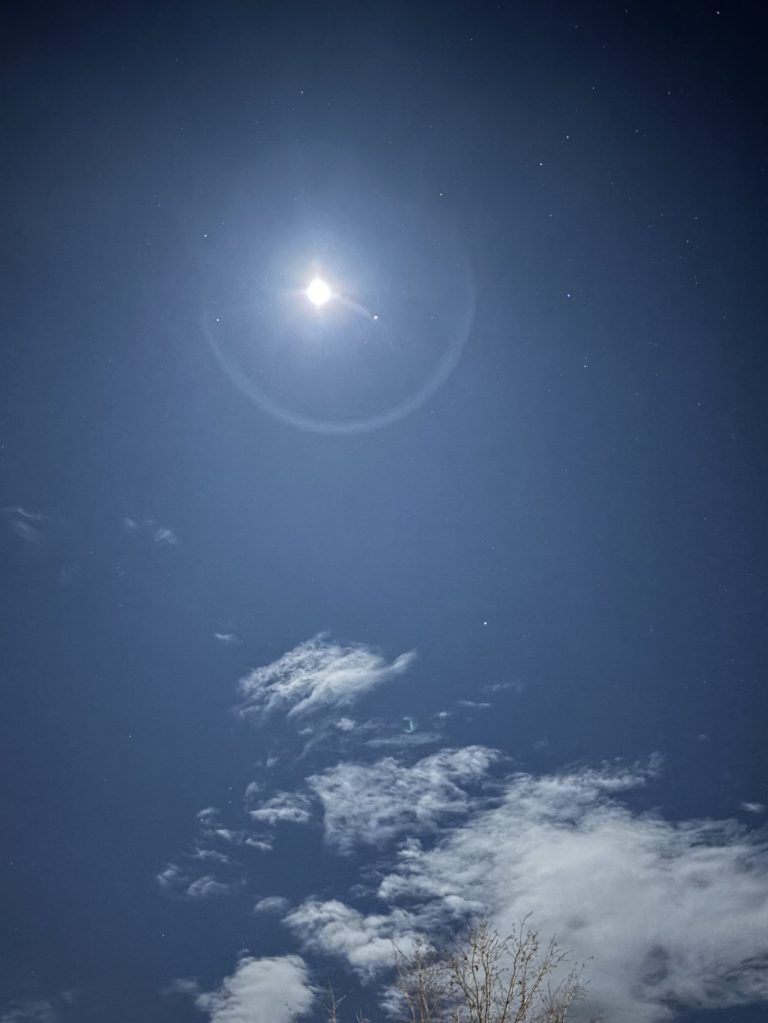
moon and stars as seen from my home

Sixteen years ago I suffered a loss which I think about daily. Michael and I had met only a few years before that, and had fallen in love very quickly. We had similar values including kindness and mutual respect.

Yesterday I re-read the eulogy which his best friend wrote and delivered at Michael’s funeral. In it he commented on the “four sturdy pillars that lifted and sustained Michael”.

  • unrelenting perseverance and courage
  • formidable intellect, and attention to detail
  • huge enthusiasm and appetite for the world around him
  • his faith — an illogical belief in the improbable (Mencken). Michael was a scholarly and scientific physician who did not see his faith as illogical, nor his beliefs improbable. (words of Michael’s best friend)

About seven years before we met, Michael had been told by his doctors that he had 3% chance to live beyond six months. His response was that he would be in that 3%, and his strength and courage added ten well-lived years to his life. Some of his accomplishments after the diagnosis were climbing Machu Picchu, assisting his hockey team at tournaments, singing in the church choir, returning to full-time work for more than five years, travelling and fishing, gardening and riding his bike all over the city.

Of course, like all of us, Michael had quirks. When he sang in the choir he loved hanging on to notes just a bit longer than the rest to see if we heard his voice. His garden consisted of squash, tomatoes and basil — that’s all one really needs! He would till it with a pitch fork, and I would stop by in the morning to repair the underground sprinkler hose. In his fridge he kept a plastic container with large wolf spiders that he caught in his house, saving them to show his teenage son when he came to visit.

We hired a fishing guide to take us fishing for a couple of hours on Kootenay Lake. When Michael caught a huge rainbow trout, an amazing smile lit up his face–he was so proud of his catch. I teased him because he never lit up like that when he was looking at me. But, on our wedding day, I saw that smile again; I will never forget it.

We were aware that our time together after our wedding would be short and we hoped for at least a year. The brain tumour grew very quickly after the wedding, giving us only 3 1/2 months.

I think of Michael every day, but especially on anniversaries such as today. He died the morning of February 23rd, 2010.

Road trips and reflections

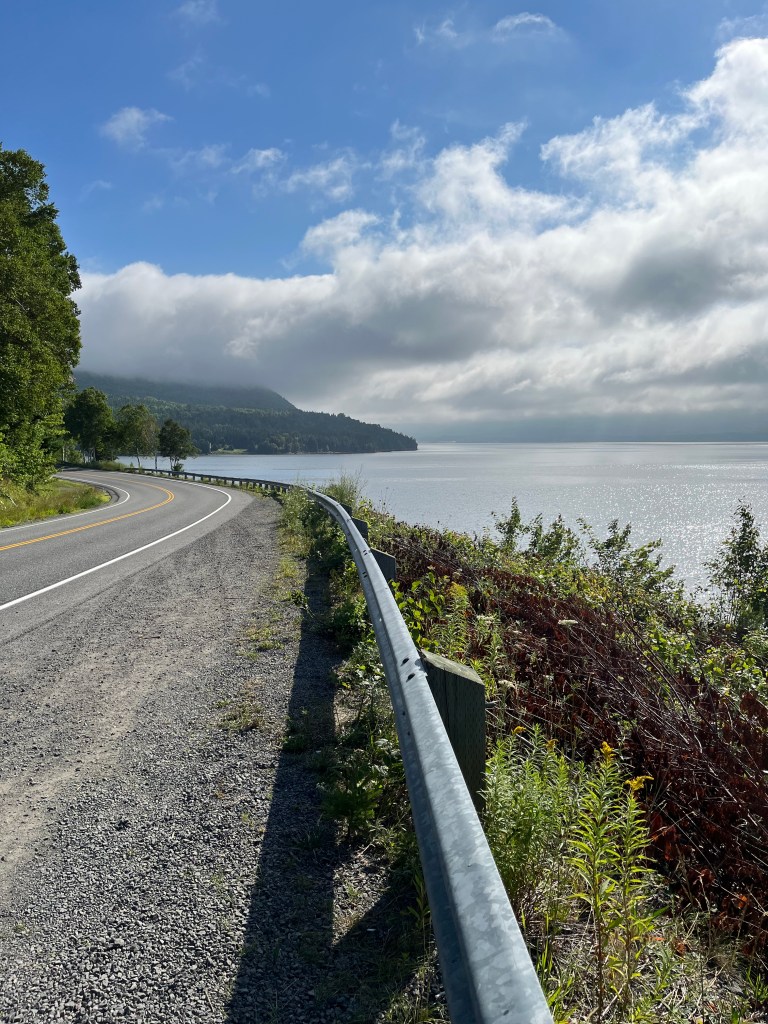
Cape Breton, 2022

I have been awake since shortly before midnight. Nothing seems to be helping, so I decided to watch a movie. As usual I was drawing some comparisons about my own life, and started contemplating some of my past reactions to conflict.

This movie was about a young girl who discovered that her “dad” was not her real dad, and she went on a road trip along with a new acquaintance to find her real dad. The movie takes place in the UK and the road trip starts in London. They have many adventures and discoveries about life as they head to Scotland.

I started to get excited about my own cross-country trip this summer, thinking about the constantly changing scenery across Canada that I’ll once again observe on the drive. Then I started to think back on why and when I would feel the need to go on drives.

As a young child whenever I felt overwhelmed by conflict at home, I would run away. Those short runs seldom lasted longer than an hour — I didn’t want anyone to notice that I was gone. I think the longest episode was under two hours, when I realized that if I wasn’t home soon I would miss the call for lunch, and I would get into far too much trouble from mom!

Once I was old enough to drive, I remember loving the feeling of freedom when I went for drives down to the lake. Of course I couldn’t get permission (or car keys) to just leave without a “real” reason or a destination until my parents moved away and left me behind. By that point, since I was alone in the house there was no reason to “escape” although I do recall driving far enough out of town to go on hikes.

Later, during my first marriage, when conflict happened I would get in the car and drive nowhere in particular. At the time we lived in Bangkok and traffic jams were the norm, so “driving” did not give me a sense of freedom. Getting out of the house was necessary but provided little relief.

During another marriage I would go on drives to escape the violence. Those were not long drives since my children were still at home. They were definitely escapes to help me clear my head and my emotions which did help calm me down.

Driving across the country is something I look forward to. The actual trip itself takes 6-7 days. I make it longer by stopping to visit along the way. This summer I have my new-found 2nd cousins, and my dad’s 1st cousin (whom I only found out about a few months ago!) to meet, my granddaughters and other family and friends.

The question I am asking myself is — is my cross-country drive an escape from something, or to something? Is it an escape? Is it a search for something? In June I will have many hours, and days to attempt come up with an answer.

Facing Fears: Lessons from Lacy

I said the “W” word

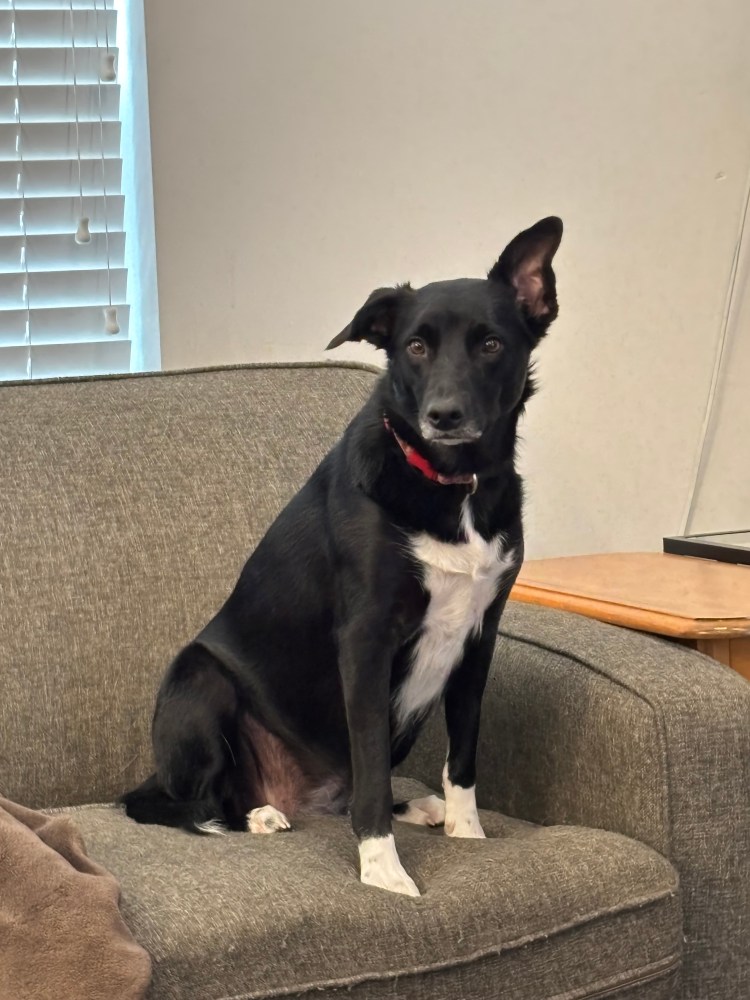
I spent the week between Christmas and New Year’s Eve at my son’s place. He cooked for me, we watched movies, and we took his two dogs on long walks. Then I stayed with Lacy while he spent a few days with Gia out of town.

Lacy is afraid of everything; leaves rustling and crackling when stepped upon, cars warming up in driveways, children skating on an iced-over pond, random signs, posts, garbage bins, and of course other dogs and people. While walking with her I learned to watch for these dangers and steer her around them.

She loves going out for walks, although I’m sure she is hoping that eventually I will learn to trust her enough to let her off-leash. After all, she does get to chase balls off-leash when my son takes her out. That would be easier if I could get her into my car — but my car is a very unfamiliar space to Lacy, and no amount of coaxing will get her to climb in.

I also have fears. I am afraid of big dogs that bark, certain men with evil auras (yes, I am full of judgement when it comes to men), crowds, shopping malls in the middle of the afternoon, airports, illness.

They say that exposure therapy can help, but I know that it won’t help Lacy become less fearful. She is so much better when her big sister is with her, or when she is gently encouraged by my son.

So, maybe facing our fears should be less about being exposed to things we fear, and more about moving on with gentle, loving support.

Birthdays and fading memories

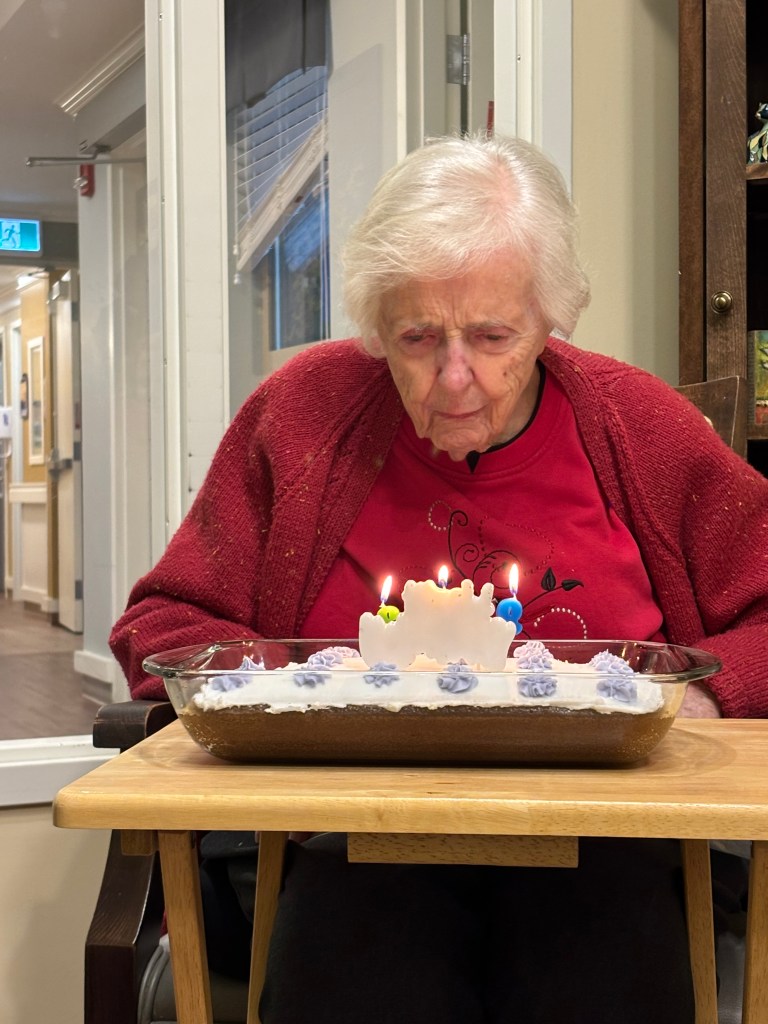
Two days ago we celebrated mom’s 93rd birthday. A few family members joined for a lunch and cake at the care home.

Mom is living with dementia and although she knows who we are when we show up, her short-term memory is extremely short term. In the two minutes it takes to walk from the lunch room to her bedroom she had already forgotten that we had lunch together and shared some of her cake. In fact she had to keep looking at the digital clock and calendar to see what day it was, and couldn’t believe (frequently) that she was as ancient as 93.

Her long-term memory is also disappearing. My brother died from cancer 37 1/2 years ago. He was mom’s favourite (for good reason — a very kind, gentle, thoughtful and intelligent person) and mom essentially stopped living when he died. The depression lasted for decades, and she no longer found joy in what once were some of her favourite activities.

She used to host large gatherings and parties at the house. She used to decorate the house for Christmas, starting the day after her birthday every year. Those activities ended in 1988. Dad became the one who put up the tree, and decorated for Christmas. The fancy dishes were seldom used, and parties did not happen again.

When mom experienced a brain aneurysm about 20 years ago, she reminded us that if things got worse to please just let her go.

But on Monday when reminded that she had to make a wish before blowing out the candles, mom told my sister that her wish was “to celebrate my 94th birthday next year”.

Since moving into the care home mom has become softer and kinder. She reminds me often that they take very good care of her, thanks me for coming to visit; she is kind to everyone she meets and she doesn’t even complain about the noise next door.

Now, mom seldom recognizes photos of my brother when we show her the memory books on her dresser. Not only is her memory of her son fading, but so is the anger and sadness that followed his passing.

Maybe dementia isn’t so bad after all.